What makes this different from every other AWS course out there?
Most courses teach you services. This one teaches you to think like someone who shapes decisions and builds with them at work.
You won't sit through slides explaining what S3 or CloudFormation are. You'll deal with real enterprise scenarios - multi-account setup, security governance, cost controls, improving architectures - and you'll build your way through them. Then you'll work on group assignments, finalize a solution, and present it live.
No other online course does the group project with live evaluation. You get real-time questions and you defend your decision (and improve it as well). No other instructor has led cloud platforms at senior management level and also holds AWS Community Hero status. No other program keeps the cohort intentionally small so you actually have access to the instructor.
If you've taken video courses and still feel like you couldn't defend an architecture decision in a real meeting - this is what those courses were missing.
What kind of people typically join this program?
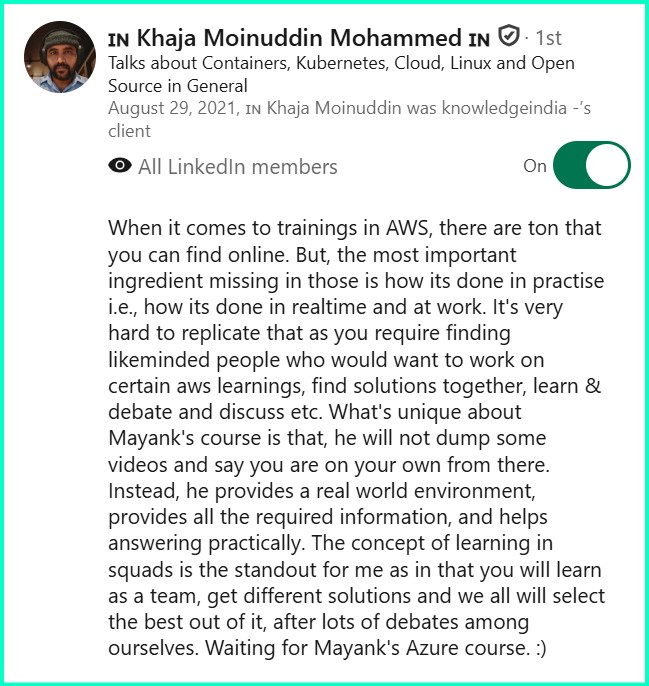
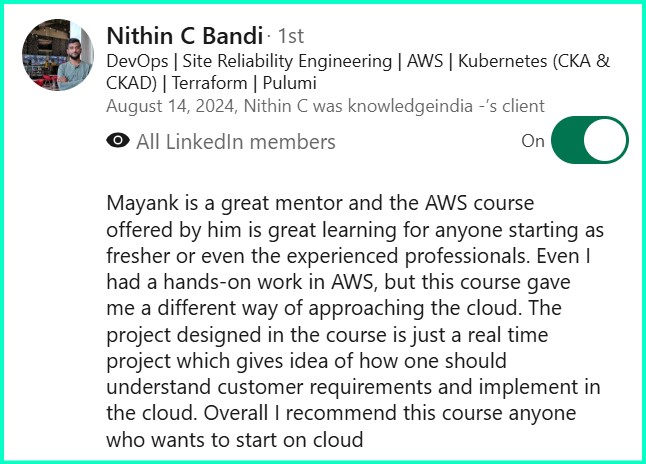
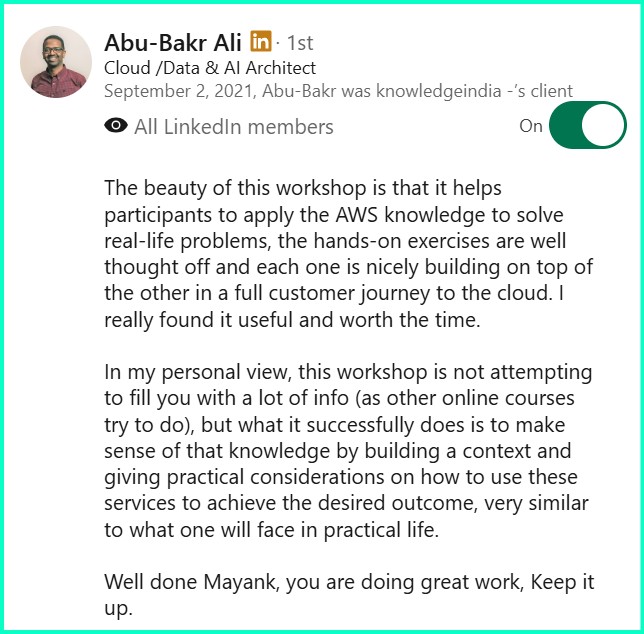
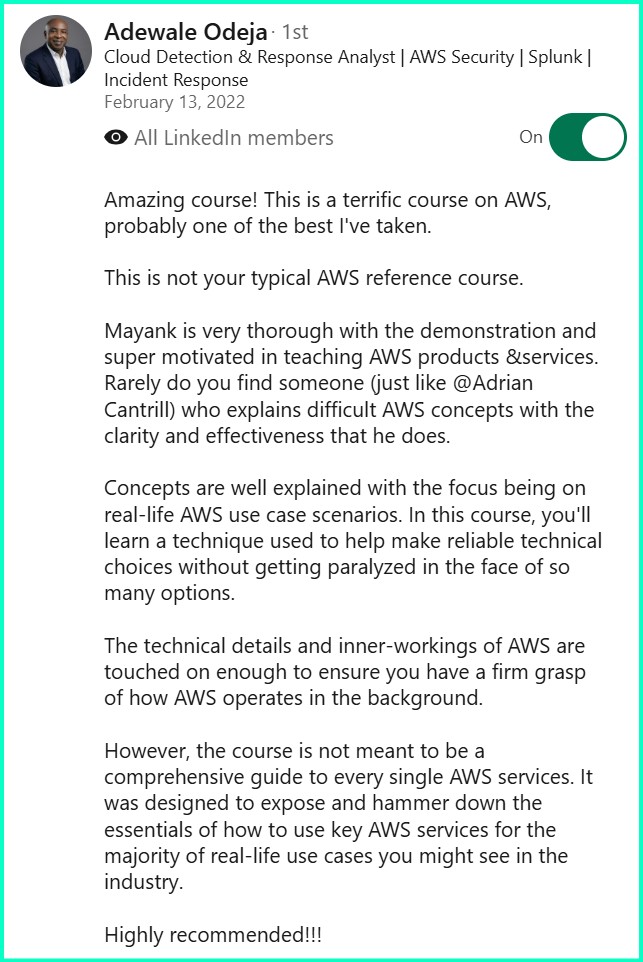
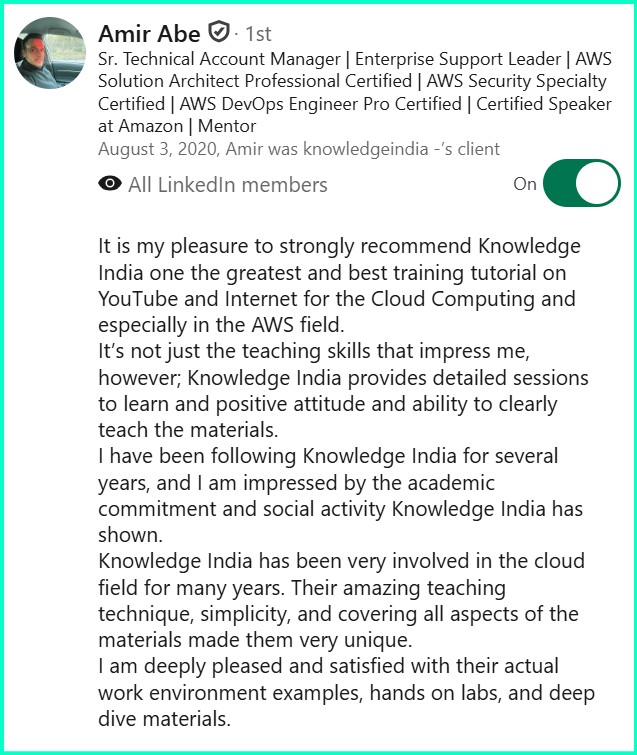
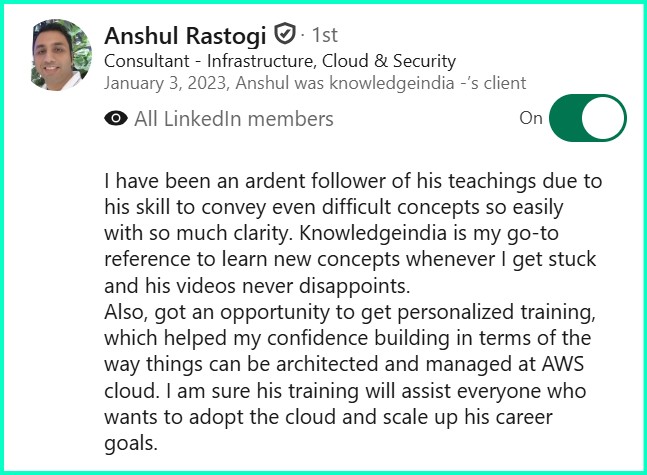
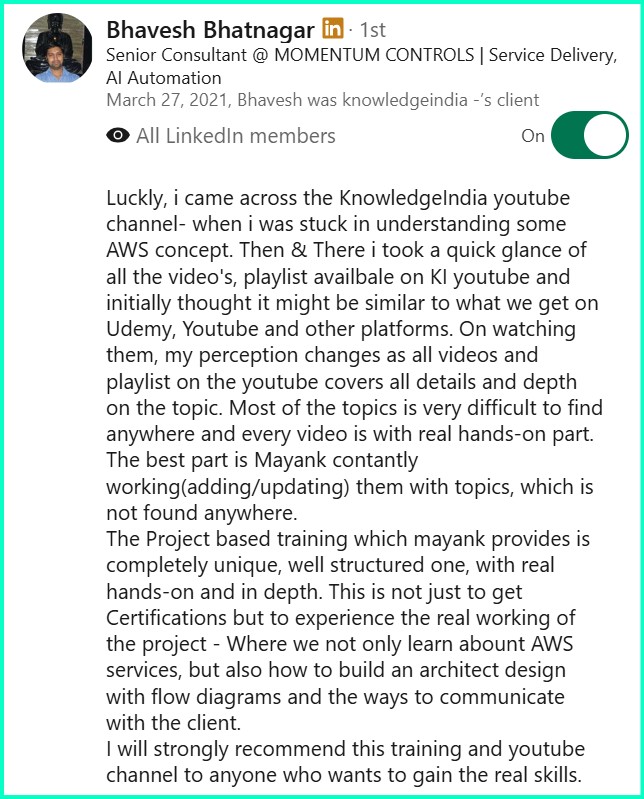
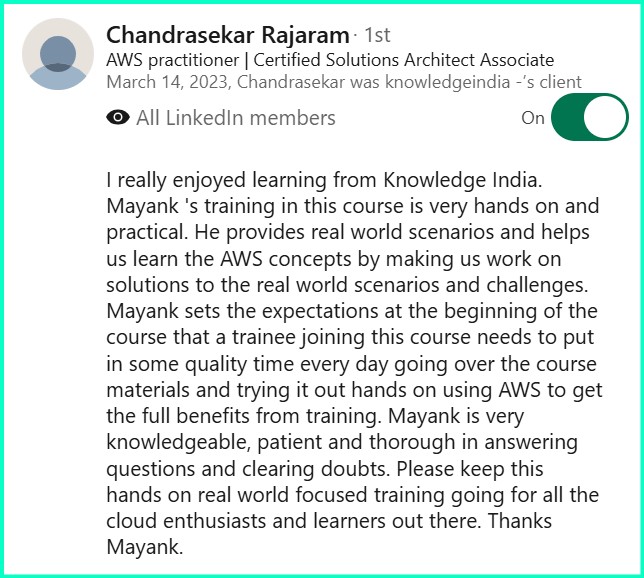
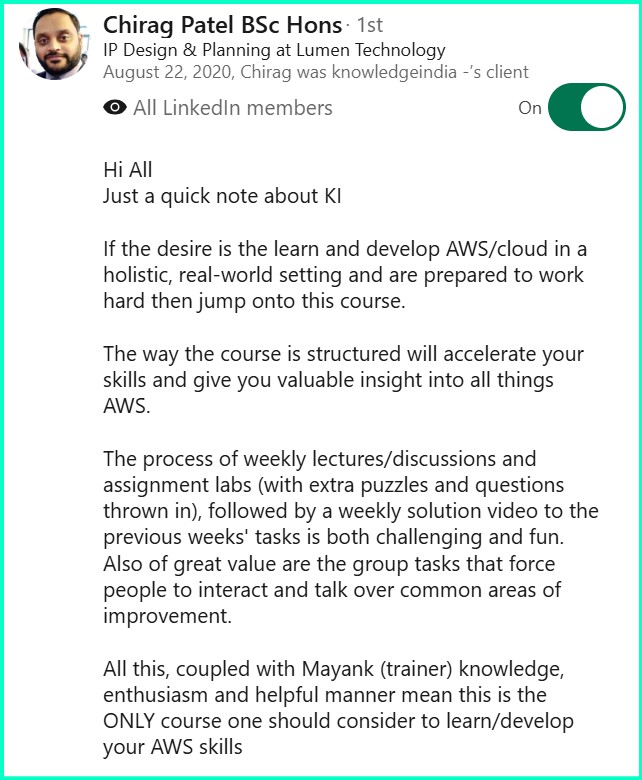
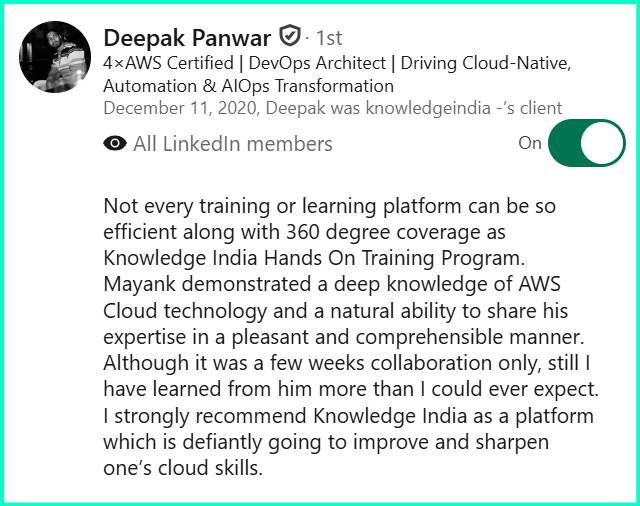
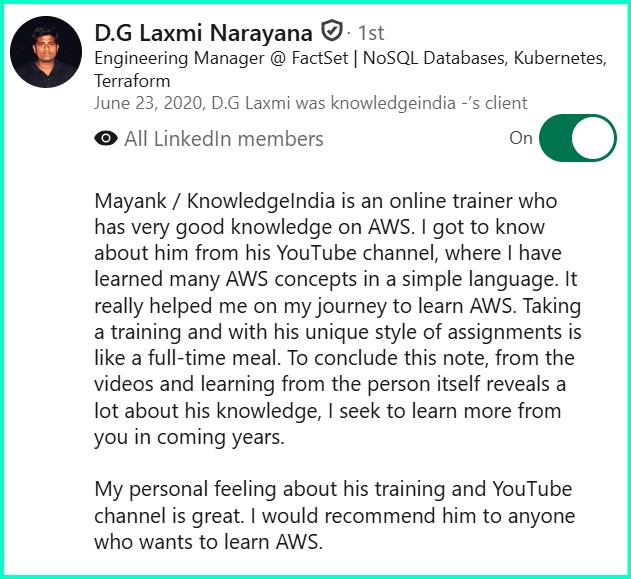
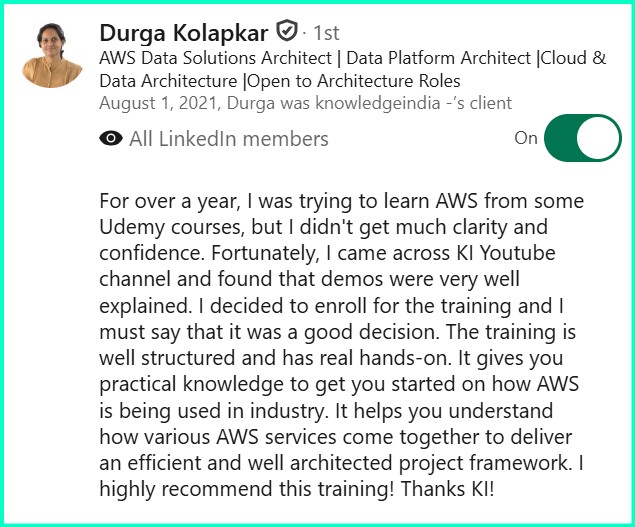
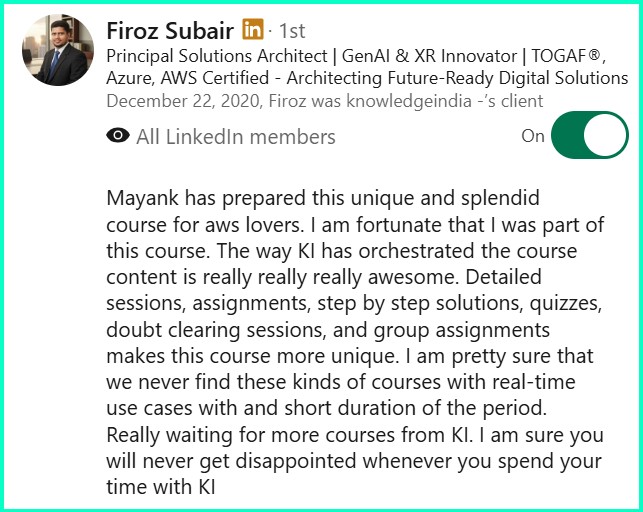
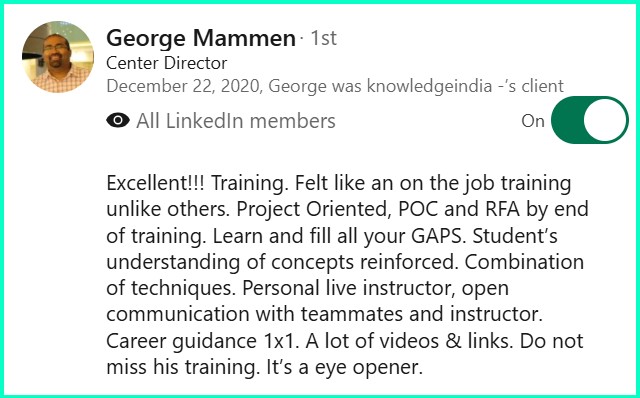
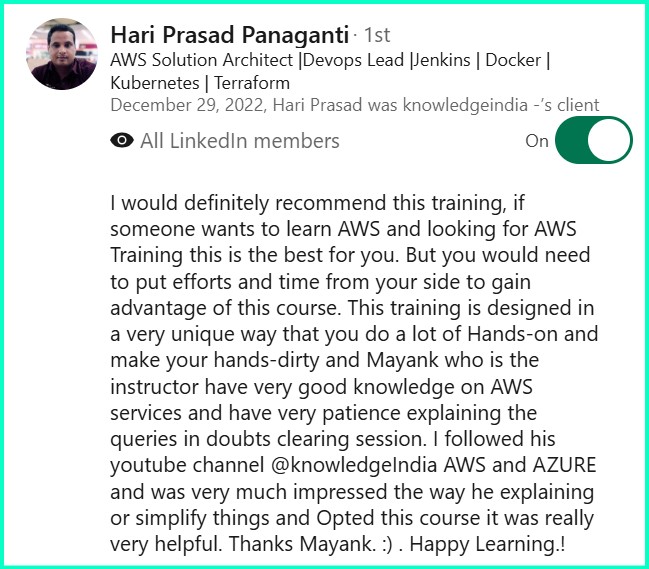
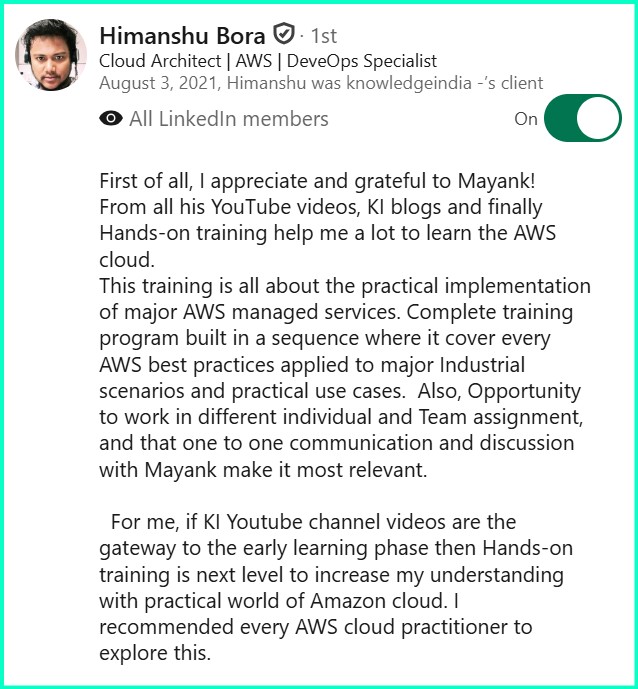
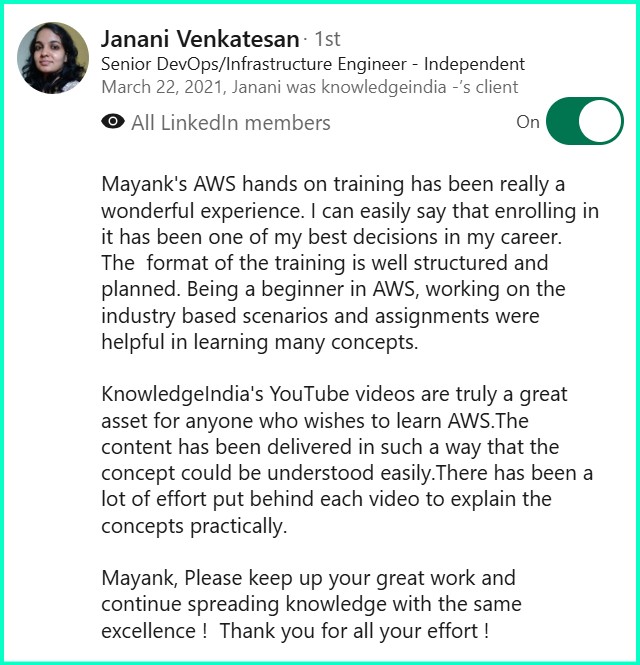
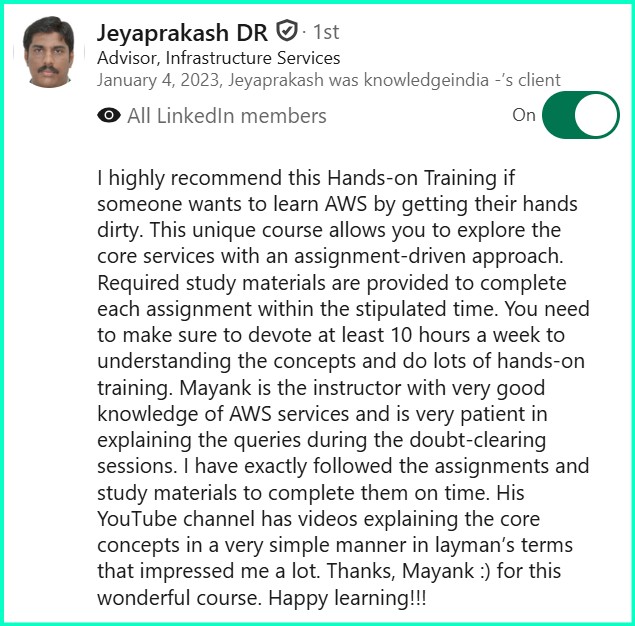
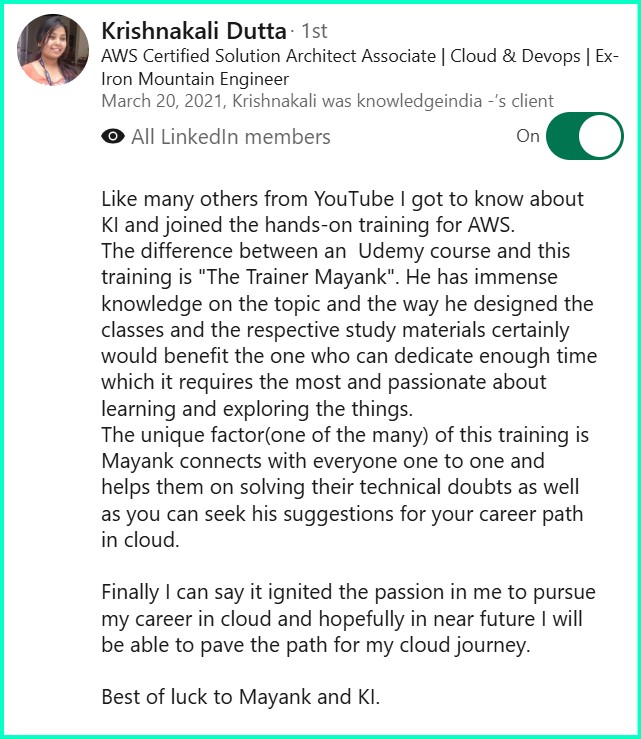
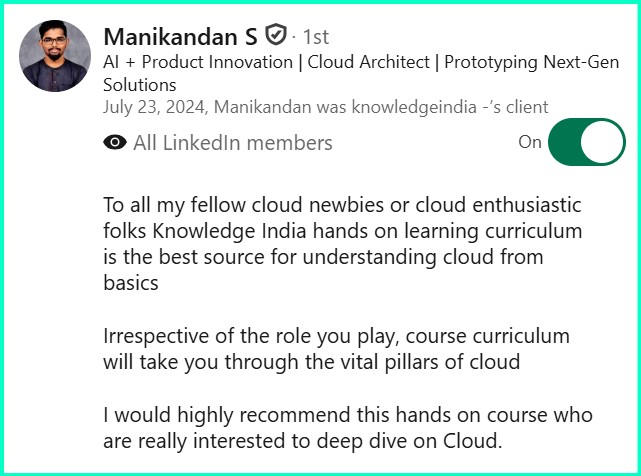
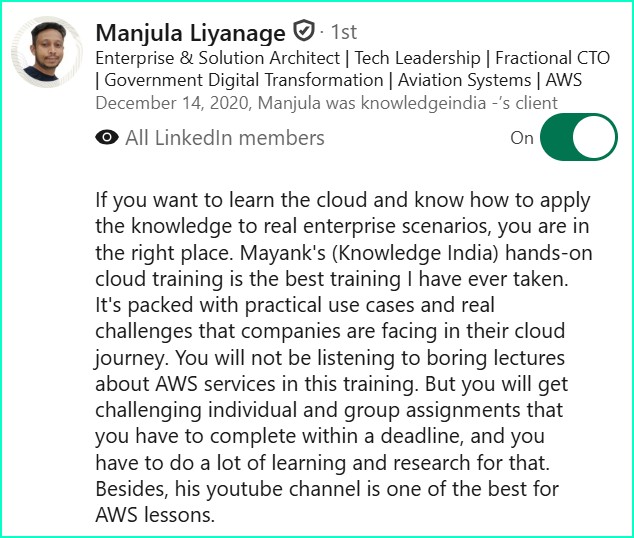
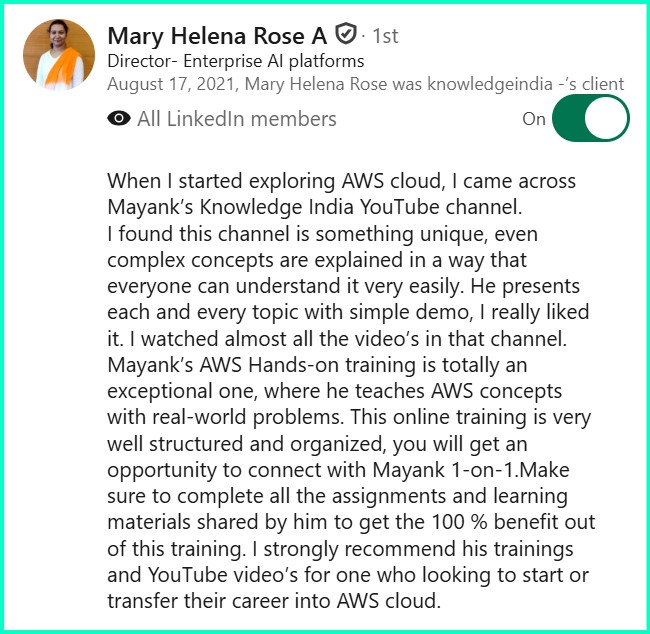
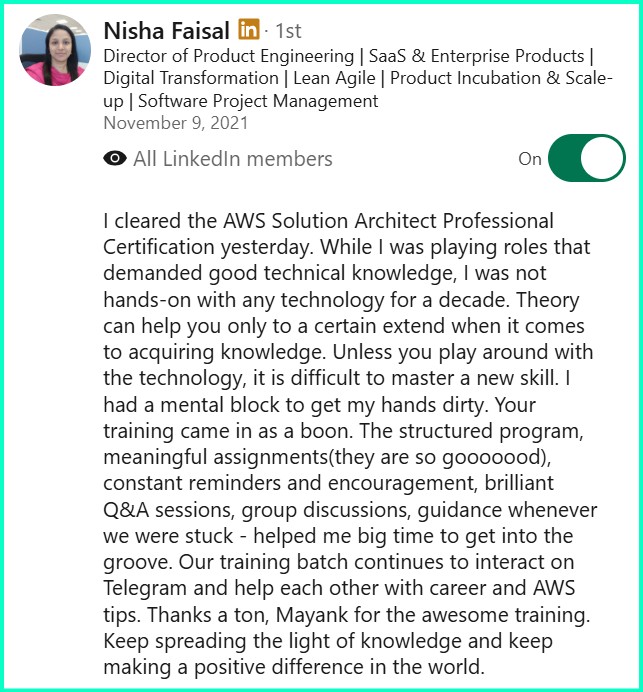
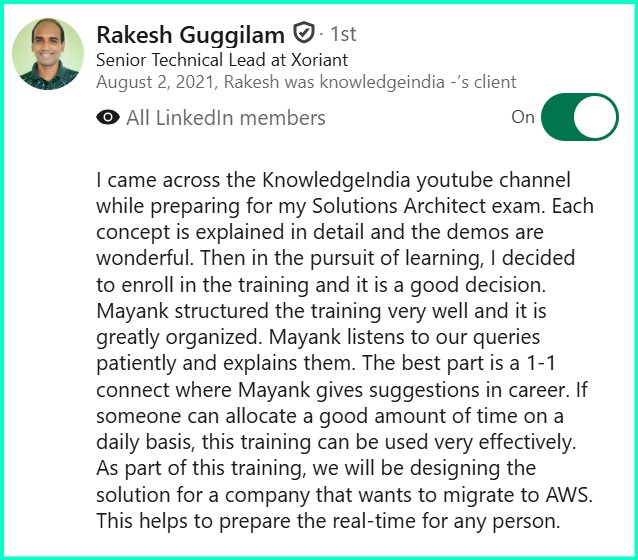
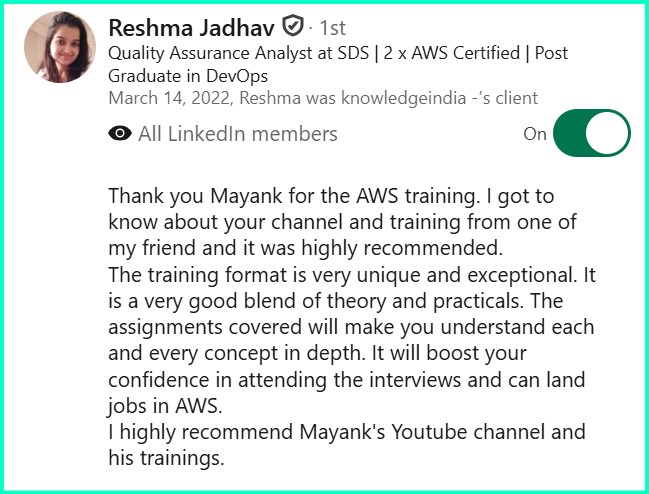
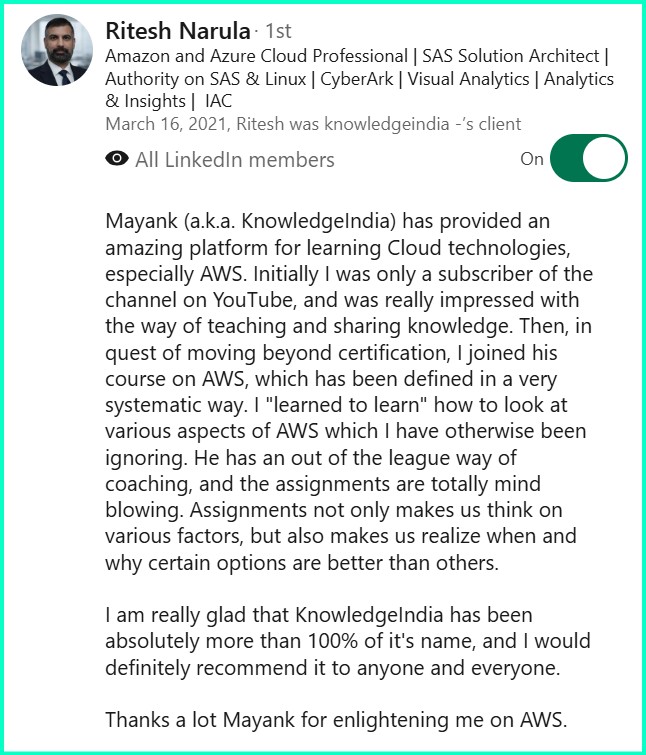
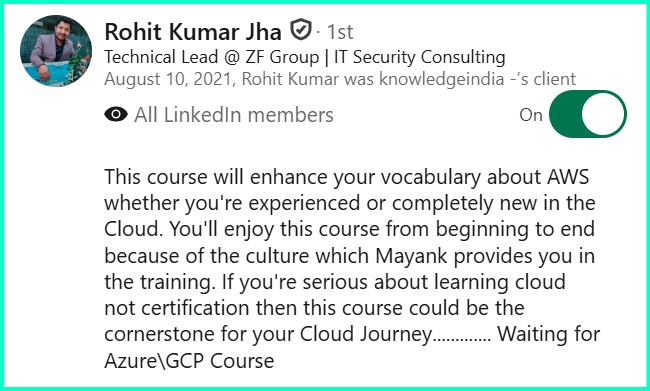
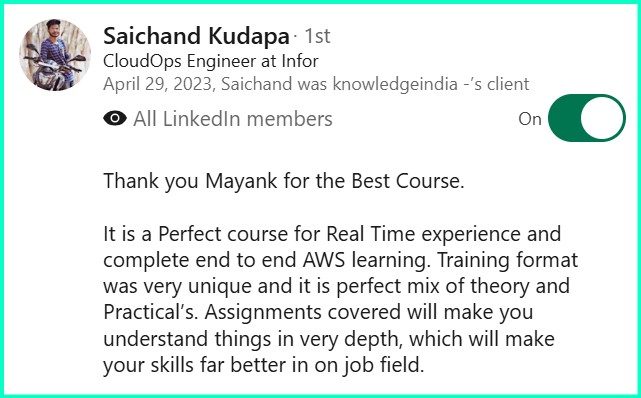
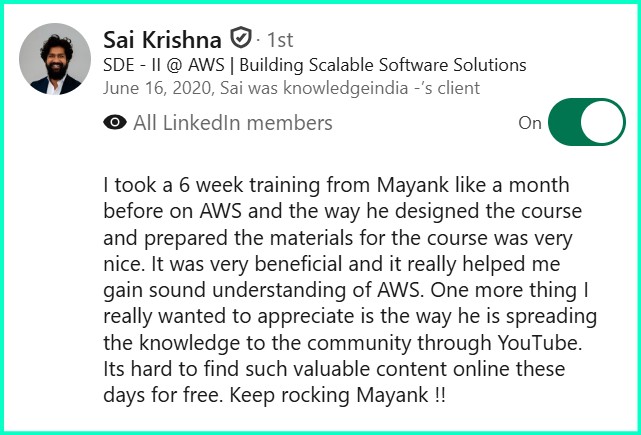
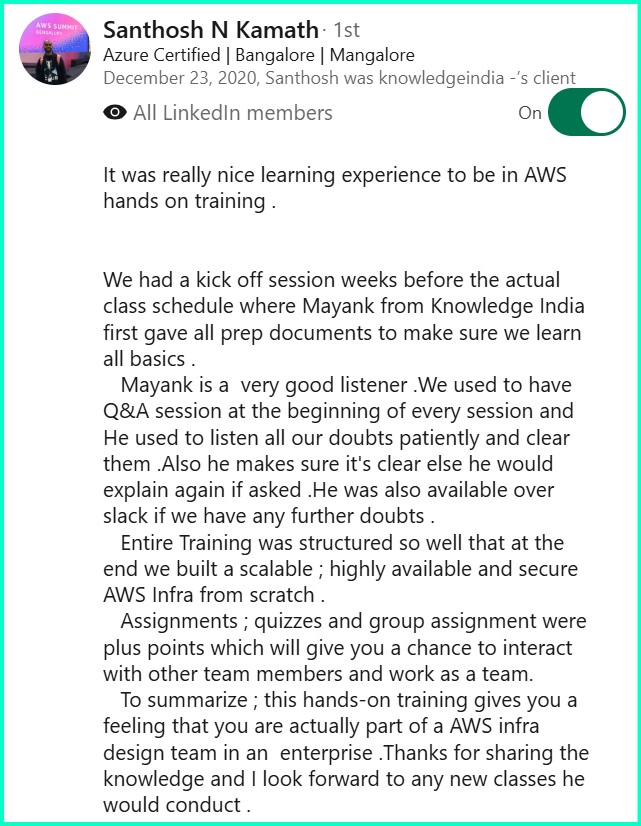
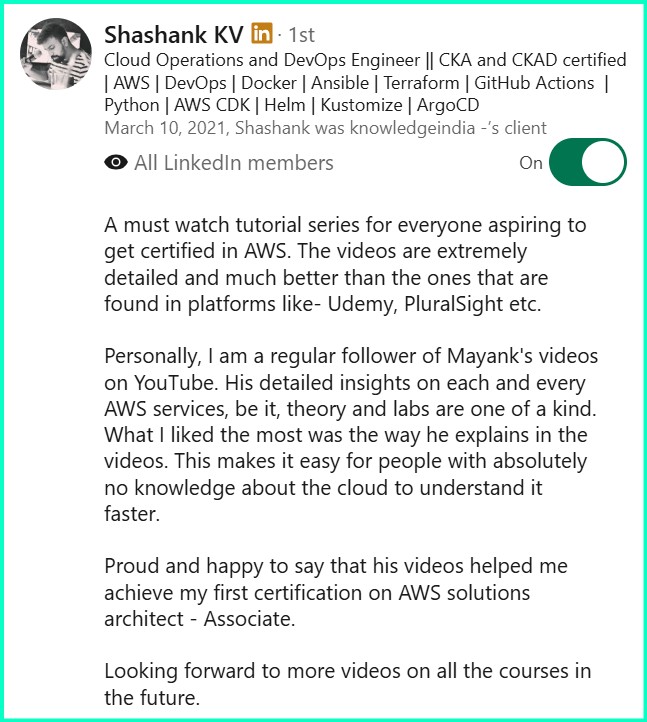
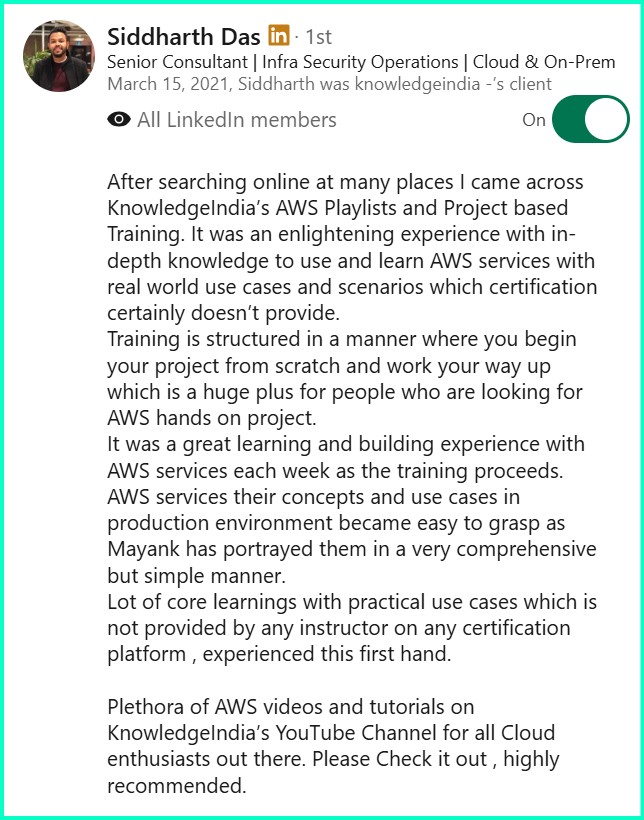
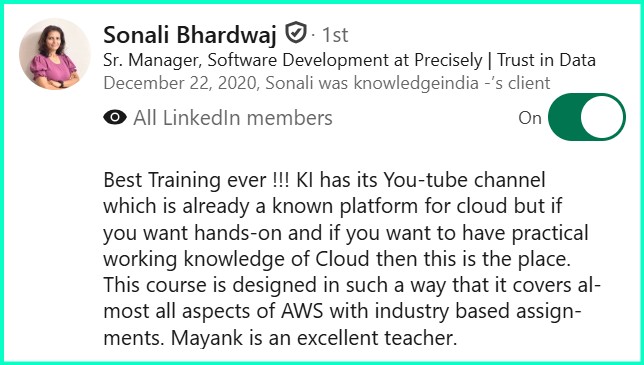
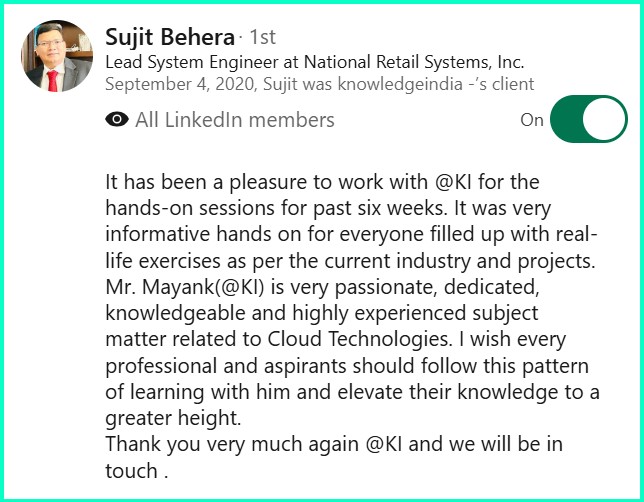
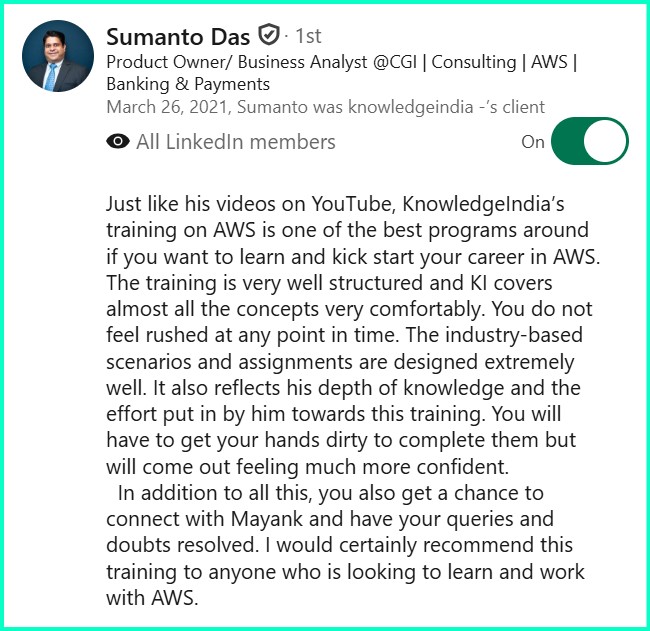
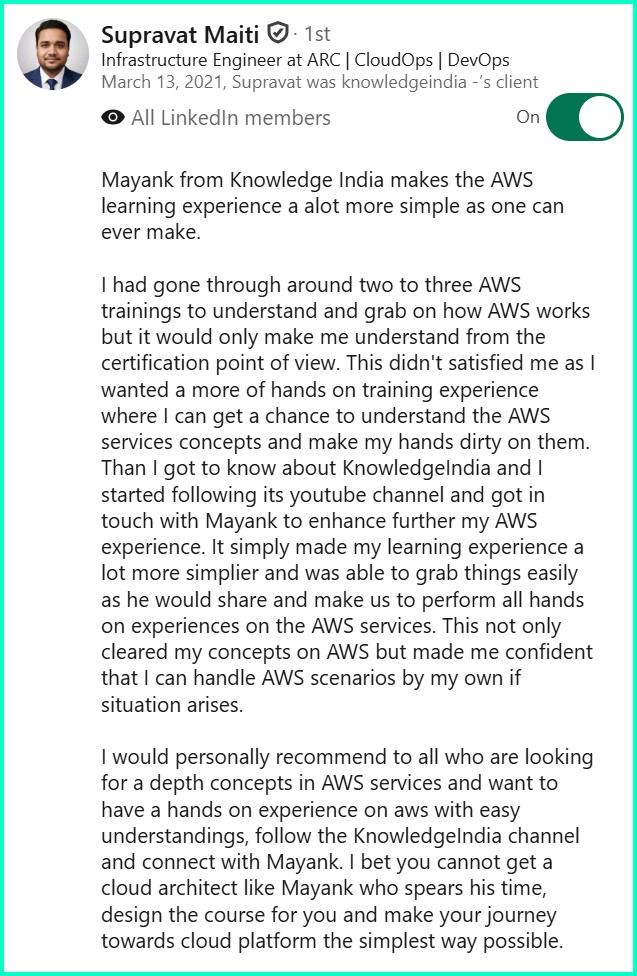
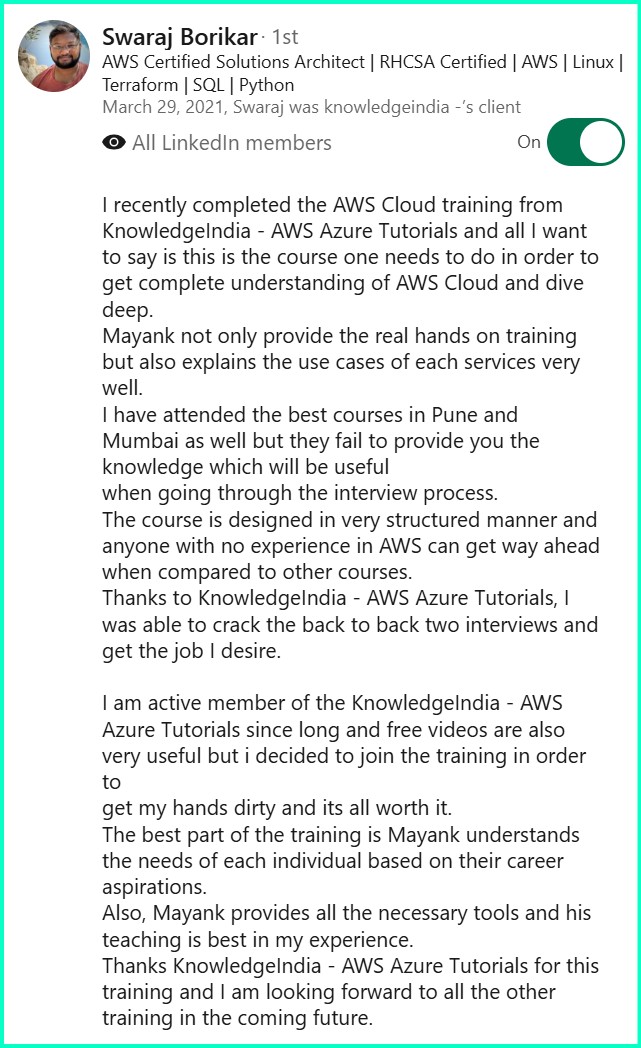
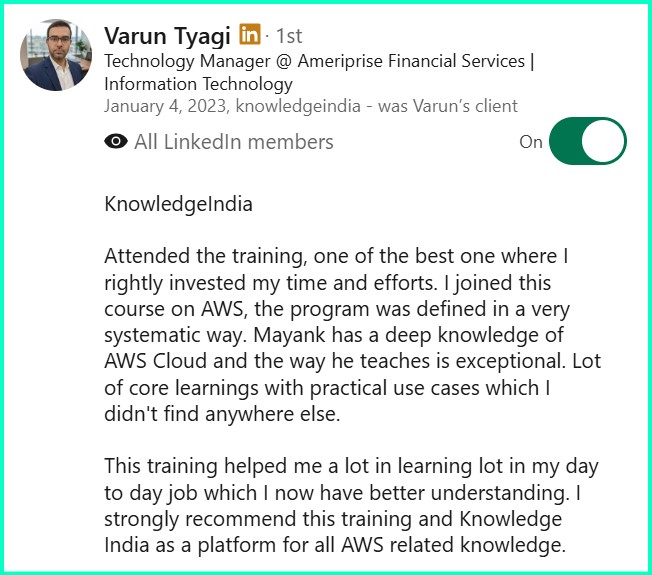
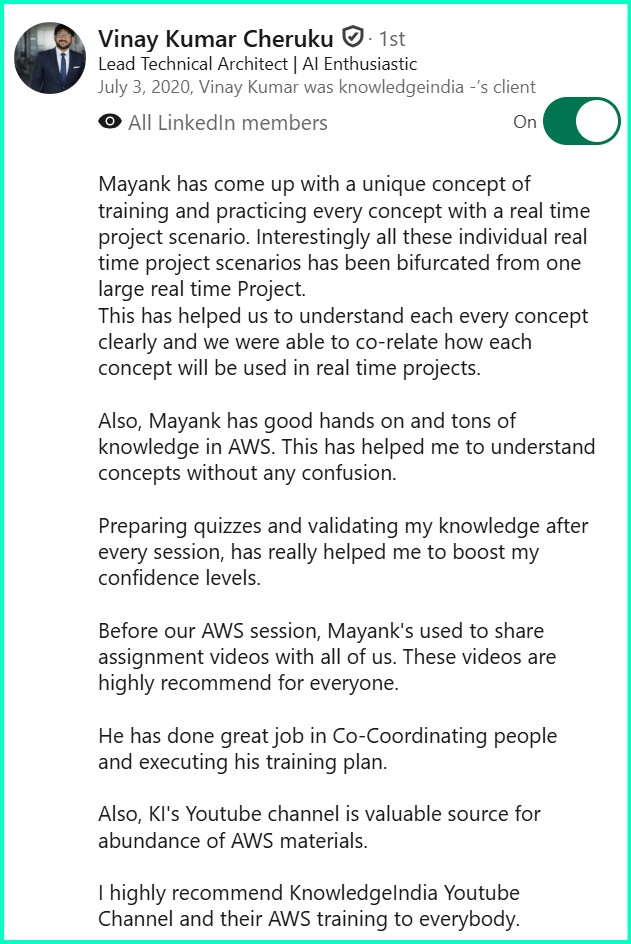
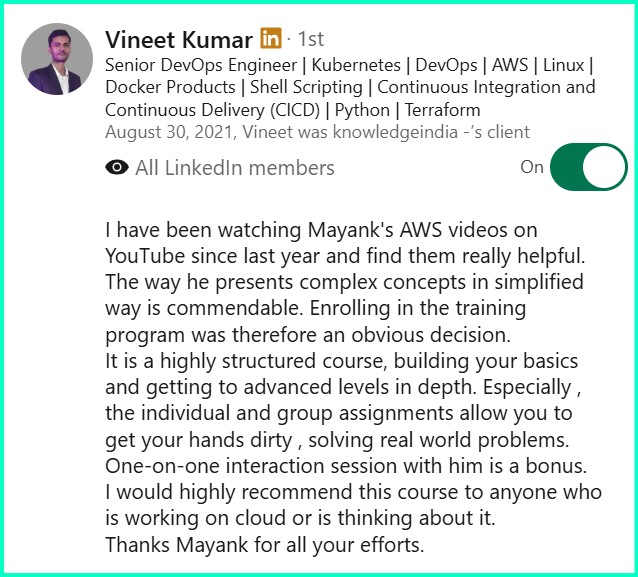
The most common path is this: someone gets a cloud certification, starts working, and quickly realises that certification knowledge and real-world working knowledge are two different things. That gap is exactly what this program fills. Beyond that, people have joined straight out of college, mid-career from non-cloud roles, and with 20+ years of experience - all have succeeded when they put in the work. The LinkedIn recommendations from past students give you the clearest picture of who joins and what they get out of it.
What role or profile does this program prepare me for?
Cloud is no longer a specialist function - it runs inside every team, every org, every project. This program prepares you to work confidently in the cloud space regardless of your profile. If you're an Architect, you'll be able to design and defend real enterprise solutions. If you're an Administrator, you'll understand the governance, security, and operational patterns that actually matter at work. If you're a Developer, you'll understand the infrastructure your applications run on. The strong foundation this course builds is relevant across all three.
How is this different from the free content on the KnowledgeIndia YouTube channel?
The YouTube channel has 200+ tutorials and we keep adding to it - it's genuinely useful and free. But this program is a different thing entirely. The assignments, solution videos, and group scenarios are designed exclusively for cohort participants and are not available publicly. More importantly, watching a tutorial and solving a real enterprise scenario under your own steam are two very different experiences. The live sessions, doubt clearing, group work, and 1-on-1 guidance are things a YouTube video simply cannot replicate. If you're not convinced, watch the channel first - and join when you are.
What do I need to study before Day 1?
You don't need deep expertise in AWS before joining - but you shouldn't be completely new to it either. A working familiarity with core services like EC2, VPC, IAM, S3, Load Balancers, Auto Scaling, and RDS is what you need coming in. Once enrolled, you'll receive a curated set of resources and hands-on exercises to go through before the first session. Everything is planned and organised - no searching, no guessing where to start. Just work through what's shared and do the practicals. This program goes deep into every topic. The basics being in place means you can keep pace with that depth - rather than spending mental energy catching up on fundamentals while everyone else is already solving real scenarios.
Does this prepare me for AWS certification?
Not directly - that's intentional. This program is built around real-world working knowledge, not exam patterns. However, students consistently find that after completing this program, certification exams become significantly easier because they genuinely understand how things work. Several students have cleared AWS SA (Associate and Professional) after this program.
What timezones do the live sessions accommodate?
Sessions run on weekends with two time slots designed to cover the globe - whether you're joining from the US, Canada, UK, Europe, the Middle East, India, or Australia, there's a time that works for you. All sessions are recorded.
When is the next cohort starting, and what are the session timings?
We are targeting the weekend of
18th July, 2026 for the first session. Exact session time depends on your location. There are two live session time options to choose from - pick whichever works for you and mention it in your application:
Option 1 (Asia / India / Europe / Pacific friendly):
See your local time
Option 2 (Americas / Australia friendly):
See your local time
Each live session runs for
2.5 hours. You can add your location to the links (above) to see the exact local time for you. Cohort size is kept small, so early applications are recommended.
Will there be AWS costs during the program?
Many of the services we use fall within the AWS Free Tier. On top of that, a new AWS account comes with $200 in free credits - and if you're setting up a fresh account for this program, those credits will cover most if not all of the usage that sits outside Free Tier. That said, don't assume the cost will be exactly zero. A small additional expense is possible, and the actual amount depends on how carefully you follow the instructions - particularly around deleting resources after each exercise. We always flag which resources cost money so you stay in control. If someone promises to teach you real-world enterprise AWS entirely within the Free Tier, they're only showing you a fraction of it. The services that matter most at work sit well outside it. A modest spend during this program is part of learning it properly.
Can I pay in installments or get a discount?
Payment is in full (USD) before the program starts. No installments, no discounts. The current $500 price is already the discounted relaunch rate - regular pricing will be $600 from the next cohort.
What payment methods are supported?
Depending on your location, we have a convenient payment method available for you. Details will be shared once you apply.
Is there a refund policy?
There are no refunds after enrollment. That said, the program is built to accommodate real life - every session is recorded, so missing one doesn't mean falling behind. And once the cohort ends, you get 100 days of extended access to all recordings, assignments, solution videos, and materials, so you have plenty of time to revisit anything you want to go deeper on. Before signing up, review the free YouTube content at youtube.com/knowledgeindia and read the LinkedIn recommendations from past students. Enroll only when you're confident in your commitment.
Why are the session recordings not available forever?
This program is built around active participation over a defined period - not passive consumption at your own pace. That's a deliberate choice. If the recordings were available indefinitely, the incentive to stay engaged during the program disappears, and the cohort experience breaks down. The 100 days of extended access after the program ends is generous buffer for real life - travel, work pressure, personal circumstances. But the expectation is that you treat this as a commitment, not a library you'll get to someday.
Why do you ask for a LinkedIn profile when applying?
This program is kept small and the cohort quality matters - to you as much as to us. Reviewing your LinkedIn profile helps verify that you're a genuine professional learner. It's not about your seniority or years of experience. It's about ensuring the cohort is made up of people who are serious about being there. If you don't have a LinkedIn profile, reach out directly and we'll find another way to connect before you enroll.
How many participants are typically in a cohort?
Cohort sizes are kept small intentionally - usually in the range of 15 to 25 participants. Small enough that discussions are real, questions don't get lost, and you have genuine access to the instructor throughout the program.
This is not a course where you're one of hundreds watching a recording. The cohort size is part of what makes the experience work.
Will you help me with job search or interviews?
My focus is on building genuine understanding - not just familiarity with services, but the ability to reason through scenarios, make trade-off decisions, and explain your thinking clearly. That's what gets you through interviews. In the 1-on-1 career guidance session, I cover how to approach interviews, position your profile, and think about your next move. But showing up and performing in those interviews is on you. Every student who has gone through this program with full commitment has found that the hardest technical questions in cloud interviews stopped feeling hard.
Will I receive a certificate when I finish?
Yes, you'll receive a certificate of completion once you finish the program. But I'll be honest with you - the certificate is the least valuable thing you'll walk away with.
What actually matters to employers is the ability to build, explain your decisions, and handle real scenarios. That's what this program focuses on. The students who've gone through this and landed roles or promotions didn't lead with the certificate - they led with what they could do.
The certificate is yours. Use it. But build the real thing first.
I have a question that's not answered here. How do I reach you?
The best way to reach out is via LinkedIn - I'm most responsive there. You can message me directly at
linkedin.com/in/knowledgeindia/. If you prefer email, write to train[at]knowledgeindia[dot]in.